
Bank of Canada Holds The Overnight Policy Rate Steady For the Fourth Consecutive Meeting

General Angela Calla 29 Apr

Bank of Canada Holds Policy Rate Steady
Today, the Bank of Canada once again held the policy rate steady at 2.25%. This is the bottom of the Bank’s estimate of the neutral overnight rate, where monetary policy is neither expansionary nor contractionary. With inflation hovering at 2.4% and core inflation falling to 2.0%, the Governing Council sees the current overnight rate as appropriate, as the Bank looks through the inflationary effects of the war in Iran.

“The evolving conflict in the Middle East is causing heightened volatility, and US trade policy continues to reshape global trade patterns. Both are ongoing sources of uncertainty. The Bank’s April outlook assumes tariffs remain unchanged and the global benchmark price of oil declines to US$75 per barrel by mid 2027, still well above pre-war oil prices”. According to the BoC, if that happens, inflation should peak around 3% in April and ease back to the 2% target by early next year.

“The Iran war has led to sharply higher energy prices and transportation disruptions, diminishing growth prospects in oil-importing countries and boosting inflation worldwide. In the United States, growth is still expected to be solid over the projection horizon, boosted by AI-related investment and consumption growth. China’s economy is supported by robust exports. In the euro area, higher prices for oil and natural gas will weigh on economic activity.”

Bond yields are modestly higher since January, while equity markets, which weakened sharply at the outset of the war, have recovered. Since the start of the war, the US dollar has appreciated against most major currencies.

“The outlook for economic growth in Canada is little changed from the January Monetary Policy Report (MPR) projection. After a contraction in the fourth quarter of 2025, growth is forecast to have resumed in early 2026. Consumer and government spending are supporting economic activity, while tariffs and trade uncertainty are weighing on exports and business investment. Housing activity declined in the fourth quarter and is held back by slow population growth, economic uncertainty and ongoing affordability issues. The labour market is soft, with subdued employment growth over the past year and job losses in sectors targeted by US tariffs. The unemployment rate remains in the 6½%‑7% range, reflecting both weak hiring and fewer job seekers.”

The Bank’s April forecast projects GDP growth of 1.2% in 2026, rising to 1.6% in 2027 and 1.7% in 2028 as growth in exports and business investment resumes along a lower trajectory. With GDP growing slightly above potential, the current excess supply in the economy is gradually absorbed. While the war in Iran may alter its composition, overall GDP growth is little changed in the updated forecast: Since Canada is a large net exporter of oil, higher oil prices increase national income even as consumers are squeezed by higher gasoline prices.

The Bank’s press release goes on to say that “CPI inflation will likely rise further in April to about 3%. Based on the assumption that oil prices will ease, inflation is forecast to come down to the 2% target early next year and remain around 2% over the projection horizon.

Against this backdrop and taking into account the current projection, Governing Council decided to maintain the policy rate at 2.25%. We are closely monitoring the impact of the conflict in the Middle East and the economy’s response to US tariffs and trade policy uncertainty. Governing Council is looking through the war’s immediate impact on inflation, but will not let higher energy prices become persistent inflation. As the outlook evolves, we stand ready to respond as needed. The Bank is committed to maintaining Canadians’ confidence in price stability through this period of global upheaval.”

WTI crude oil futures jumped more than 5% to above $105 per barrel on Wednesday, amid no signs of a near-term end to the conflict with Iran or the reopening of the Strait of Hormuz. The surge comes as markets weigh the United Arab Emirates’ shock exit from OPEC alongside signs that the conflict involving Iran may persist. Reports that Donald Trump is preparing to extend a blockade on Iranian ports have heightened fears of prolonged supply disruptions, particularly through the critical Strait of Hormuz.

Negotiations remain stalled, with both sides entrenched, raising expectations that the standoff could drag on for weeks. Meanwhile, US inventory data showed sharp declines in crude and fuel stockpiles, while exports surged to record highs above 6 million barrels per day, underscoring tightening global supply. Gasoline and refined fuel prices have also spiked, amplifying inflation concerns worldwide as energy markets remain on edge.

The Canadian dollar weakened, and market-driven interest rates rose despite the Bank of Canada’s rate hold. The Fed is expected to follow suit this afternoon, maintaining its policy rate at 3.5% to 3.75%.

Bottom Line

The Bank of Canada has shown its willingness to bolster the Canadian economy amid unprecedented trade uncertainty and a record oil price shock. Ottawa, too, has taken actions to reduce the burden of higher prices on Canadians by temporarily eliminating the excise tax on oil. PM Carney is also working to diversify Canadian trade away from the US.

There will continue to be substantial frictions that limit the geographical diversification of trade sought by Ottawa. The US is Canada’s only neighbour; hence, there is a lack of alternative markets that equal the US in size and scale, and, before Trump, in shared values on free trade.

In his speech before the press conference today, Governor Tiff Macklem suggested that, “if the United States were to impose significant new trade restrictions on Canada, we may need to cut the policy rate further to support economic growth. Alternatively, if oil prices continue to increase, and particularly if they remain elevated, the risk that higher energy prices become ongoing generalized inflation increases. If this starts to happen, monetary policy will have more work to do—there may be a need for consecutive increases in the policy rate.

It is highly unlikely that the Bank of Canada would tighten monetary policy when the housing market is as depressed as it is today.

Dr. Sherry Cooper
Chief Economist, Dominion Lending Centres
drsherrycooper@dominionlending.ca


Angela Calla is a mortgage renewal and debt elimination expert with over 20 years of industry experience. She is also a multi-award-winning mortgage professional. Since beginning as a mortgage broker in 2004, Angela has helped thousands of Canadians optimize their mortgage strategies, eliminate debt, and build wealth through real estate.

She is the best-selling author of The Mortgage Code, which equips readers with the tools to make informed financial decisions. Additionally, she is the host of Canada’s longest-running finance radio show on CKNW, where she simplifies mortgage advice and empowers listeners to take control of their financial futures.

Angela has been recognized as Business Leader of the Year (2020) by the Tri-Cities Chamber of Commerce and Entrepreneur of the Year (2019) by the City of Port Coquitlam. She is also a sought-after speaker and educator, delivering accredited training for real estate boards across Greater Vancouver.

Angela is a frequent go-to source for media and publishers across the country. For media interviews, speaking inquiries, or personal mortgage assistance, please contact Angela at hello@countoncalla.ca or at 604-802-3983.

Click here to view the latest news on our blog. 

Staying Ahead of Tomorrow’s Bank of Canada News

General Angela Calla 28 Apr

The Bank of Canada announces its next rate decision tomorrow, and most economists currently expect rates to hold steady. However, what matters most is not just the headline—it’s how today’s market conditions affect your mortgage, buying power, and long-term financial plan.  Here is the link to see tomorrow’s announcement Bank of Canada or follow our social media accounts @angelacallamortgageteam.

Right now, buyers are negotiating strong opportunities, and many homeowners are surprised to learn they may not need to wait until renewal to improve their situation.

Most recently, we helped a family in Pitt Meadows restructure their mortgage early, improve cash flow by $1,000 per month, and position themselves to potentially retire 5 years sooner through better planning.

Whether you are:
• Buying a home
• Renewing soon
• Wondering if you should refinance early
• Reviewing life insurance
• Wanting a second opinion on your financial plan

Now is the time to act.

For mortgage consultations, use our booking link

If you’d like a broader financial review outside the mortgage, simply reply with 3 days/times that work for you. We have direct access to our independent financial planning partners’ calendar and can coordinate an introduction for you.

Don’t wait for the next announcement schedule for June 10th to wonder what you should have done today.


Angela Calla is a mortgage renewal and debt elimination expert with over 20 years of industry experience. She is also a multi-award-winning mortgage professional. Since beginning as a mortgage broker in 2004, Angela has helped thousands of Canadians optimize their mortgage strategies, eliminate debt, and build wealth through real estate.

She is the best-selling author of The Mortgage Code, which equips readers with the tools to make informed financial decisions. Additionally, she is the host of Canada’s longest-running finance radio show on CKNW, where she simplifies mortgage advice and empowers listeners to take control of their financial futures.

Angela has been recognized as Business Leader of the Year (2020) by the Tri-Cities Chamber of Commerce and Entrepreneur of the Year (2019) by the City of Port Coquitlam. She is also a sought-after speaker and educator, delivering accredited training for real estate boards across Greater Vancouver.

Angela is a frequent go-to source for media and publishers across the country. For media interviews, speaking inquiries, or personal mortgage assistance, please contact Angela at hello@countoncalla.ca or at 604-802-3983.

Click here to view the latest news on our blog. 
Real Brokerage to buy Re/Max in widening industry consolidation

General Angela Calla 27 Apr

Real Brokerage Inc. is acquiring Re/Max Holdings Inc. in a deal valued at US$13.80 a share, in the latest example of consolidation in the U.S. real estate brokerage industry.

The deal will create a brokerage with 180,000 real estate agents, including more than 100,000 in the U.S. and Canada, according to a statement Monday. It will combine upstart Real, founded in 2014 as a technology-powered brokerage, with one of the real estate brokerage industry’s traditional stalwarts.

Read the full article HERE


Angela Calla is a mortgage renewal and debt elimination expert with over 20 years of industry experience. She is also a multi-award-winning mortgage professional. Since beginning as a mortgage broker in 2004, Angela has helped thousands of Canadians optimize their mortgage strategies, eliminate debt, and build wealth through real estate.

She is the best-selling author of The Mortgage Code, which equips readers with the tools to make informed financial decisions. Additionally, she is the host of Canada’s longest-running finance radio show on CKNW, where she simplifies mortgage advice and empowers listeners to take control of their financial futures.

Angela has been recognized as Business Leader of the Year (2020) by the Tri-Cities Chamber of Commerce and Entrepreneur of the Year (2019) by the City of Port Coquitlam. She is also a sought-after speaker and educator, delivering accredited training for real estate boards across Greater Vancouver.

Angela is a frequent go-to source for media and publishers across the country. For media interviews, speaking inquiries, or personal mortgage assistance, please contact Angela at hello@countoncalla.ca or at 604-802-3983.

Click here to view the latest news on our blog. 

Canadian Inflation Jumps to 2.4% Y/Y As War Causes Oil Price Shock

General Angela Calla 21 Apr

Canadian Inflation Surges to 2.4% Y/Y on Oil Price Shock  

The headline inflation rate in Canada surged as expected with the War in Iran and the resulting oil price shock. The inflation rate hit 2.4%, up from 1.8% in February, tying for the highest in a year but a bit below market expectations of 2.5%. The surge reflected the initial impact of the war in the Middle East on Canadian consumer prices, as disruptions to tankers from the Persian Gulf triggered energy shortages worldwide. The consumer energy inflation swung to 3.9% from the deflation rate of 9.3% in the previous month, enough to raise transportation inflation to 3.7% (vs -0.8% in February). In turn, prices accelerated for shelter (1.7% vs 1.5%) and recreation and education (2.6% vs 0.5%). Meanwhile, base effects from the reintroduction of GST/HST taxes continued to impact food inflation, which fell to 4% from the 5.4% in February. The CPI rose 0.9% from the previous month, driven by a 21.2% surge in gasoline prices. Excluding gasoline, the CPI rose at a slower year-over-year pace in March (+2.2%) than in February (+2.4%). The CPI was up 0.9% month-over-month in March. On a seasonally adjusted monthly basis, the CPI increased 0.5%.

Higher energy prices drive up inflation

Energy prices rose 3.9% on a year-over-year basis in March, after decreasing 9.3% in February. On a monthly basis, energy prices rose 13.1% in March.

Higher gasoline prices were the primary driver of the year-over-year acceleration in the CPI, as consumers paid 5.9% more for gasoline in March than in the same month the previous year. Prices rose 21.2% in a month, the largest monthly gasoline price increase on record, driven by a supply shock from the conflict in the Middle East. However, this monthly effect was muted year over year due to the comparison with prices from March 2025, which included the since-removed consumer carbon levy. The removal of the consumer carbon levy will no longer impact the 12-month movement as of April 2026, and this will be reflected in next month’s CPI release.

Moderating the acceleration in energy prices were lower prices for natural gas (-18.1%), which are largely dependent on North American supply and therefore more insulated from global price changes.

Prices for food purchased from stores rose 4.4% on a yearly basis in March, after increasing 4.1% in February.

On a year-over-year basis, prices for fresh vegetables increased 7.8% in March, the largest increase since August 2023 (+8.7%), after rising 0.5% in February. Cucumbers, peppers and celery all had notable price growth in March, due in part to tighter supplies related to adverse growing conditions in producing countries.


Core inflation measures also came in below expectations, with core inflation hitting 2.0% and the CPI trimmed-mean 2.2% from a year ago, the slowest pace in five years, amid weak housing resales and smaller rent price increases.


Bottom Line

It is very good news that the inflation backdrop softened last month, before the onslaught of the Iran war and the oil price shock. Some of the weaker base effects will be evident in the March CPI data as well, mitigating the impact of soaring energy and commodity prices on this month’s headline inflation number.

The Bank of Canada and the U.S. Federal Reserve will remain on the sidelines at the next statement date on April 29, as a relatively quick end to the Iran war would keep a lid on inflation. President Trump has asked NATO countries to send warships to the Middle East to help open the Strait of Hormuz. The sooner the war ends, the sooner the oil price shock will dissipate. Given the uncertainty, the central banks will do best to keep their powder dry this time around, particularly given that labour markets in both countries have weakened substantially.


Dr. Sherry Cooper
Chief Economist, Dominion Lending Centres
drsherrycooper@dominionlending.ca


Angela Calla is a mortgage renewal and debt elimination expert with over 20 years of industry experience. She is also a multi-award-winning mortgage professional. Since beginning as a mortgage broker in 2004, Angela has helped thousands of Canadians optimize their mortgage strategies, eliminate debt, and build wealth through real estate.

She is the best-selling author of The Mortgage Code, which equips readers with the tools to make informed financial decisions. Additionally, she is the host of Canada’s longest-running finance radio show on CKNW, where she simplifies mortgage advice and empowers listeners to take control of their financial futures.

Angela has been recognized as Business Leader of the Year (2020) by the Tri-Cities Chamber of Commerce and Entrepreneur of the Year (2019) by the City of Port Coquitlam. She is also a sought-after speaker and educator, delivering accredited training for real estate boards across Greater Vancouver.

Angela is a frequent go-to source for media and publishers across the country. For media interviews, speaking inquiries, or personal mortgage assistance, please contact Angela at hello@countoncalla.ca or at 604-802-3983.

Click here to view the latest news on our blog. 
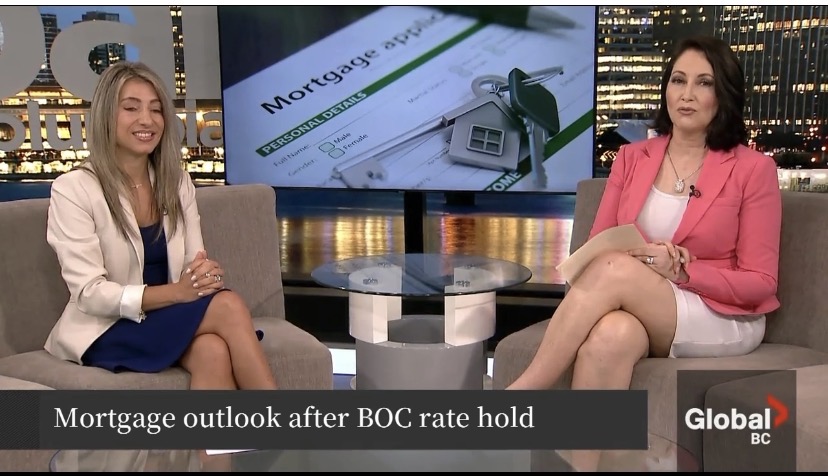
Canada’s Labour Force Survey for February came in much weaker than expected, predating the beginning of the war in Iran

General Angela Calla 18 Mar


The Canadian Jobs Report Was Much Weaker Than Expected In February 
Today’s Labour Force Survey showed considerable weakness last month, even before the Gulf War took hold of the global economy. Employment fell by 83,400 jobs after edging down in January (-25,000; -0.1%). This is the largest decline in employment in more than four years. On a year-over-year basis, employment was little changed in February 2026.

In February, the employment rate—the proportion of the population aged 15 and older who are employed—fell by 0.2 percentage points to 60.6%, marking the second consecutive monthly decline. The employment rate in February was just above the recent low of 60.5% observed in August 2025 and was down 0.4 percentage points year over year.

The number of people working full-time declined by 108,000 (-0.6%), offsetting growth recorded over the previous two months. At the same time, there was little variation in the number of people working part-time in February.

The number of employees in the private sector fell by 73,000 (-0.5%) in February, the second consecutive monthly decline. These declines offset gains observed in October and November 2025. Compared with 12 months earlier, the number of private sector employees was virtually unchanged in February.

The number of public sector employees and the number of self-employed workers were both little changed last month.

The unemployment rate rose 0.2 percentage points to 6.7% in February, as employment fell and more people searched for work. The unemployment rate was virtually unchanged from 12 months earlier (6.6%) and remained below the recent high of 7.1% reached in August and September 2025.

The participation rate—the proportion of the population aged 15 and older who were employed or looking for work—fell by 0.1 percentage points to 64.9% in February. It was down 0.4 percentage points year over year.

The employment decline in February was spread across services-producing industries (-56,000; -0.3%) and goods-producing industries (-28,000; -0.7%).

In services-producing industries, the largest decline was in wholesale and retail trade (-18,000; -0.6%). Employment in this industry has trended down since October 2025, with a cumulative decline of 52,000 (-1.7%) over this period.

In goods-producing industries, employment edged down in February in construction (-12,000; -0.7%) and manufacturing (-9,200; -0.5%). On a year-over-year basis, employment was little changed in construction, while it was down by 52,000 (-2.8%) in manufacturing.

Bottom Line

Today’s employment report is stale news as the war in Iran, which began on February 28 with coordinated strikes by the US and Israel targeting Iranian nuclear and military infrastructure, has had profound effects on the global economy. Owing to the closure of the Straits of Hormuz, oil flows are down by roughly 20 million barrels. Even with the largest release ever from strategic petroleum reserves, oil prices remain near $100 a barrel, a dramatic uptick from just two weeks ago.

Ordinarily, such economic weakness would trigger central bank easing, but the surge in energy prices will add to inflation, at least temporarily. Labour markets remain soft as the economy bears the weight of US tariffs and an upcoming CUSMA review looms over business. This is likely to complicate the Bank of Canada’s future monetary policy path. While the Bank might otherwise consider a rate cut to return growth and labour markets to healthier levels, the surge in oil prices is inflationary.

The Bank of Canada’s sole mandate is to return inflation to its 2% target, while the Fed’s mandate is to control inflation while maximizing noninflationary growth. The energy shock, if persistent, could justify a rate hike.

The BoC meets again next Wednesday, March 18, and markets and economists expect officials to hold the policy rate steady at 2.25%. The February CPI report for Canada will be released on Monday, but the February data are now ancient history, given the war. Meanwhile, hourly wages for full-time permanent employees rose 4.2% from a year ago, compared with 3.3% in January. Economists surveyed were expecting a 3.2% increase.

Much depends upon how long the war will last. According to today’s Wall St. Journal, oil markets are “waking up to a new reality: Disruption to the Gulf’s prodigious energy supplies isn’t ending anytime soon.” Many analysts aver that crude could hit new multiyear highs if the conflict drags on.

“Goldman Sachs this week raised its oil price forecasts, citing longer-than-expected disruption. Brent crude could average $145 in March and April in a more extreme scenario, it said. The bank now expects disruption to flows through the strait to last 21 days, up from its previous forecast of 10 days. Macquarie Group is now predicting that crude prices could top $150 if the strait remains closed for a few weeks. Others say oil prices could go even higher.”

“One reason for the changing outlook is a surge in attacks on tankers near the strait. Over the past 24 hours, at least seven vessels were hit in waters off the coast of Dubai and Iraq. One of the ships, a foreign tanker carrying Iraqi fuel oil, was ablaze in Iraqi waters. US officials said that Iran has also started to litter the strait with sea mines that could give the country outsized power to wreak havoc with the global economy.

“The war in the Middle East is creating the largest supply disruption in the history of the global oil market,” the International Energy Agency said Thursday as it slashed its forecast for oil-supply growth this year.


Article courtesy of Dr. Sherry Cooper, Chief Economist, DLC


Angela Calla is a mortgage renewal and debt elimination expert with over 20 years of industry experience. She is also a multi-award-winning mortgage professional. Since beginning as a mortgage broker in 2004, Angela has helped thousands of Canadians optimize their mortgage strategies, eliminate debt, and build wealth through real estate.

She is the best-selling author of The Mortgage Code, which equips readers with the tools to make informed financial decisions. Additionally, she is the host of Canada’s longest-running finance radio show on CKNW, where she simplifies mortgage advice and empowers listeners to take control of their financial futures.

Angela has been recognized as Business Leader of the Year (2020) by the Tri-Cities Chamber of Commerce and Entrepreneur of the Year (2019) by the City of Port Coquitlam. She is also a sought-after speaker and educator, delivering accredited training for real estate boards across Greater Vancouver.

Angela is a frequent go-to source for media and publishers across the country. For media interviews, speaking inquiries, or personal mortgage assistance, please contact Angela at hello@countoncalla.ca or at 604-802-3983.

Click here to view the latest news on our blog. 

SHARE Family & Community Services

General Angela Calla 18 Mar


What a night!

On March 7, IMAGINE 2026 went out with a bang. We’re so proud to announce that we raised a record-breaking $280,000! These vital funds will support the Food Bank, our Early Years programming and the Foundry Tri-Cities—all graciously funded by you.

A big thank you to our presenting sponsor, Wesbild, our fabulous MCs, all our sponsors, culinary partners, silent auction prize donors, street vendors, musicians, and you—our IMAGINE supporters. We also want to celebrate our SHARE staff and volunteers for their creativity, hours and dedication to a night to remember.

A big congrats to our culinary award winners—Float 30, Matteo’s Gelato and Pasta Polo—and Joan C. of Port Moody for winning the 50/50 raffle. To learn more about this year’s Gala, click here.We’re deeply grateful for your generosity and spirit in making IMAGINE 2026 such a success. We hope you will join us at our 2027 IMAGINE on Saturday, March 6, 2027, as we continue this important work together.

Why evenings like IMAGINE matters…
Share Share
Forward Forward
Click to see more photos from IMAGINE 2026.


Angela Calla is a mortgage renewal and debt elimination expert with over 20 years of industry experience. She is also a multi-award-winning mortgage professional. Since beginning as a mortgage broker in 2004, Angela has helped thousands of Canadians optimize their mortgage strategies, eliminate debt, and build wealth through real estate.

She is the best-selling author of The Mortgage Code, which equips readers with the tools to make informed financial decisions. Additionally, she is the host of Canada’s longest-running finance radio show on CKNW, where she simplifies mortgage advice and empowers listeners to take control of their financial futures.

Angela has been recognized as Business Leader of the Year (2020) by the Tri-Cities Chamber of Commerce and Entrepreneur of the Year (2019) by the City of Port Coquitlam. She is also a sought-after speaker and educator, delivering accredited training for real estate boards across Greater Vancouver.

Angela is a frequent go-to source for media and publishers across the country. For media interviews, speaking inquiries, or personal mortgage assistance, please contact Angela at hello@countoncalla.ca or at 604-802-3983.

Click here to view the latest news on our blog. 

GST Rebate for First-Time Homebuyers Comes Into Effect

General Angela Calla 18 Mar

Great news – the GST Rebate for First-Time Homebuyers has finally come into effect!!

Announced last spring by the federal government, the bill received Royal Assent last week and eliminates “the Goods and Services Tax (GST) for first-time home buyers on new homes up to $1 million and reducing the GST for first-time home buyers on new homes between $1 million and $1.5 million.”  The Canada Revenue Agency will now be able to start processing rebate claims.

Please note that the rebate will generally apply to agreements of purchase and sale entered into on or after March 20, 2025, and before 2031.

If you have clients that were first time home buyers and purchased a new home under $1,500,000 between March 20, 2025, and today you should reach out and make sure they apply for the rebate.  We are combing through our files so that our clients are notified, but you should do the same, in particular if they did not use us.

We will soon update our website to incorporate these latest changes and will notify you when done.  Stay tuned for further emails and as always, thanks for the support.


Article courtesy of Tony Spagnuolo of Spagnuolo LLP

Angela Calla is a mortgage renewal and debt elimination expert with over 20 years of industry experience. She is also a multi-award-winning mortgage professional. Since beginning as a mortgage broker in 2004, Angela has helped thousands of Canadians optimize their mortgage strategies, eliminate debt, and build wealth through real estate.

She is the best-selling author of The Mortgage Code, which equips readers with the tools to make informed financial decisions. Additionally, she is the host of Canada’s longest-running finance radio show on CKNW, where she simplifies mortgage advice and empowers listeners to take control of their financial futures.

Angela has been recognized as Business Leader of the Year (2020) by the Tri-Cities Chamber of Commerce and Entrepreneur of the Year (2019) by the City of Port Coquitlam. She is also a sought-after speaker and educator, delivering accredited training for real estate boards across Greater Vancouver.

Angela is a frequent go-to source for media and publishers across the country. For media interviews, speaking inquiries, or personal mortgage assistance, please contact Angela at hello@countoncalla.ca or at 604-802-3983.

Click here to view the latest news on our blog. 

March 2026 Newsletter

General Angela Calla 4 Mar

March is peak maple syrup time here in Canada – when the sap starts to flow from tapped trees into sugar houses across Quebec (where 90% of Canada’s liquid gold is produced). Maple syrup not only tastes great but also has zinc, magnesium, B2, calcium, potassium and even antioxidants. It’s unrefined and unprocessed and offers a lower glycemic index compared to refined sugars. So head on out to a sugar shack (or grocery store) and indulge in a piece of healthy Canadian heritage!
Fraud Awareness: Essential Info for Today’s Digital World
March is fraud awareness month, a great reminder that no matter who you are, scams are lurking right around the corner (or in the next email, call or post!). 2026 will undoubtably throw more sneaky, compelling, and downright dastardly scams than ever. So, we’re going to look at how and why fraud scams work, spotlight the techniques scammers use, give you tips on how to recognize a scam, and teach you what you can do to protect yourself.
Why do scams work? 

Here are my 4 E’s of an effective scam:

  1. Ego: Some people think they are too smart to fall prey. Their overconfidence says they don’t need to be cautious and that exposes them to unnecessary risk.
  2. Evolution: Scams are diverse and sophisticated – it’s not a Nigerian Prince asking you to share his millions anymore! The constant changing and diversification of scams is fuelled by new technology, making it harder to spot a fake.
  3. Education: A lack of awareness means you’re a step behind a fraudster, and you’re unlikely to recognize the newest and greatest plots.
  4. Exposure: We’re online a LOT, constantly seeing fake ads, sharing our email addresses to get discount codes, commenting on social media posts – you name it. We constantly expose ourselves to predators.

Techniques Scammers Rely On

The first strategy scammers use is emotional manipulation. They’ll create uncomfortable feelings like fear or urgency to get you to act quickly. They’ll also go the sympathy and goodwill route to appeal to your good nature and empathetic side so you help them.

The second strategy scammers use is cognitive bias. It’s our predisposition to a certain mindset that would make you more willing to comply. A few examples:

  • Optimism Bias: You don’t automatically suspect a scam
  • Truth Bias: You assume people are telling the truth
  • Authority Bias: You trust and comply with authority figures (like police or government)

The third strategy scammers use is influence. They’ll compliment you or pretend to have similar likes so they build a relationship with you. They’ll act as experts or authorities so that you trust them. And, they’ll commit to it, starting slow and building over time and increasing their requests.

How Did Scammers Get So Good?

They practice. They aren’t afraid to fail. They don’t take no as an answer. And, perhaps most importantly, they embrace technology. It catches victims unaware and drastically improves their reach and persuasiveness. Here are their fanciest tools.

  1. AI: AI makes it easy for scammers to create professional-looking websites, social media content, online ads, fake photos, persuasive emails and texts, and so much more.
  2. The Dark Web: Scammers can buy nearly any data they want, plus fake identities, malware tools, stolen credit card numbers, ransomware, a fake escrow service or even hire hackers.
  3. Deepfakes: Fake videos that clone real people and real voices are easy to create with free or cheap specialized software. These fake videos can promote products, laud fake charities or causes needing donations, even endorse ponzi schemes and pump-and-dump investments.
  4. Spoofing software: Fraudsters can mimic legitimate phone numbers, emails, or websites and even trick you into thinking you’re dealing with a real person you know.

Red Flags 

Scammers aren’t just straight up asking for your SIN and banking info anymore. Here are some common themes to watch for:

  • Urgency, including limited time offers or requests to act now
  • Threats, like an account will be closed, you’ll be arrested, or a fine is forthcoming
  • Uncommon payment forms, like wanting gift cards, cryptocurrency, or Venmo transfers
  • Secrecy, warning you not to tell friends or family or alert law enforcement
  • Poor quality, like spelling errors, weird links, or other telltale signs AI has been hard at work
  • Reciprocity, as in you get hired but you pay for your own training, or you won a prize but you have to pay to receive it

How to Avoid Falling for Scams 

If you don’t want to be blindsided by a scam, the first step is to know that scams exist. Staying current on the latest schemes will go a long way. Be skeptical about almost everything online! Installing ScamShield, call blocking or anti-virus software can help prevent a scam artist from contacting you. Multi-factor authentication is a great way to stop scammers from accessing your online accounts.

If you get faced with a scam, take a step back and think about the legitimacy of the situation. Call a trusted friend or loved one and run the situation by them. Just hearing it out loud might make you come to your senses! Practice saying no. Disconnect from the situation and reach out to the company independently (like the CRA, bank, cell phone company or store) to confirm the request or offer is real. Finally, monitor your accounts for any unauthorized activity if you think you might have given away too much information.

Conclusion

If you’d like to learn more, the FCT fraud insights centre is a great place to start. Or, get your information in video form in Mastercard’s Anatomy of a Scam docuseries. Hopefully shining a spotlight on these tactics keeps your safety top of mind. Or as Bert and Gert would say, “Stay Alert, Stay Safe”!


Angela Calla is a mortgage renewal and debt elimination expert with over 20 years of industry experience. She is also a multi-award-winning mortgage professional. Since beginning as a mortgage broker in 2004, Angela has helped thousands of Canadians optimize their mortgage strategies, eliminate debt, and build wealth through real estate.

She is the best-selling author of The Mortgage Code, which equips readers with the tools to make informed financial decisions. Additionally, she is the host of Canada’s longest-running finance radio show on CKNW, where she simplifies mortgage advice and empowers listeners to take control of their financial futures.

Angela has been recognized as Business Leader of the Year (2020) by the Tri-Cities Chamber of Commerce and Entrepreneur of the Year (2019) by the City of Port Coquitlam. She is also a sought-after speaker and educator, delivering accredited training for real estate boards across Greater Vancouver.

Angela is a frequent go-to source for media and publishers across the country. For media interviews, speaking inquiries, or personal mortgage assistance, please contact Angela at hello@countoncalla.ca or at 604-802-3983.

Click here to view the latest news on our blog. 

Feeling the Pressure of High Interest Debt? There Is a Better Way

General Angela Calla 26 Feb

If rising payments, credit card balances, or multiple loan obligations are eating into your monthly cash flow, you are not alone — and you do have options.

For many homeowners, restructuring debt through a strategic mortgage review can create immediate relief and long-term financial momentum. Just this week, we helped a local family improve their monthly cash flow by $2,677.32 — money that is now going toward their retirement plan instead of servicing high-interest debt.

Here’s what that can look like:

Replace high-interest debt with one lower-interest mortgage payment

Simplify your finances with one manageable monthly obligation

Free up monthly cash flow for retirement savings, RESP contributions, or simply breathing room

Strengthen your credit profile by reducing utilization and late-payment risk

Reduce financial stress with a clear, structured plan forward

Legacy Planning- to move up the property ladder or purchase a second home/investment property

Imagine starting the next month saving hundreds or thousands of dollars a month in cashflow and what that can do for your life!

Debt consolidation isn’t about “borrowing more.”

It’s about organizing your finances strategically so your money works for you — not against you.

If you own a home and feel like your payments are working harder than you are, let’s review your options.

Reply to this email and we will reach out to let you know what we need to get started, or book a private one on one phone consult call HERE

A simple review could bring clarity, savings, and peace of mind.

You don’t have to navigate this alone.


Angela Calla is a mortgage renewal and debt elimination expert with over 20 years of industry experience. She is also a multi-award-winning mortgage professional. Since beginning as a mortgage broker in 2004, Angela has helped thousands of Canadians optimize their mortgage strategies, eliminate debt, and build wealth through real estate.

She is the best-selling author of The Mortgage Code, which equips readers with the tools to make informed financial decisions. Additionally, she is the host of Canada’s longest-running finance radio show on CKNW, where she simplifies mortgage advice and empowers listeners to take control of their financial futures.

Angela has been recognized as Business Leader of the Year (2020) by the Tri-Cities Chamber of Commerce and Entrepreneur of the Year (2019) by the City of Port Coquitlam. She is also a sought-after speaker and educator, delivering accredited training for real estate boards across Greater Vancouver.

Angela is a frequent go-to source for media and publishers across the country. For media interviews, speaking inquiries, or personal mortgage assistance, please contact Angela at hello@countoncalla.ca or at 604-802-3983.

Click here to view the latest news on our blog. 

A Step Forward for Homebuyers — But Canada Needs Bigger Solutions

General Angela Calla 12 Feb

FULL ARTICLE

Big news out of Nova Scotia today: the Government of Nova Scotia has launched a new First-Time Homebuyers Program that cuts the minimum down payment to just 2% of the purchase price — less than half of what it usually is.

This four-year pilot initiative is designed to help people who are financially ready to buy a home but can’t save up the larger down payment that’s often a barrier to entering the market. It’s being delivered through a partnership between the provincial government, Atlantic Central and participating credit unions.

Here’s what this means for eligible buyers:

What the Program Does

  • Lower Down Payment: Eligible first-time buyers can purchase with a 2% down payment instead of the standard 5% minimum.
  • Government Guarantee: The Province acts as a guarantor on these mortgages, so buyers don’t have to buy separate mortgage insurance — saving even more up front.
  • Credit Union Delivery: Mortgages are available through local credit unions that participate in the program.

Eligibility Highlights

To qualify, buyers must:

  • Have a household income of $200,000 or less
  • Pass the CMHC mortgage stress test
  • Have a credit score of at least 630
  • Be a Canadian citizen, permanent resident, or certain sponsored immigrants
  • Buy a home priced up to $570,000 in Halifax/East Hants or $500,000 elsewhere in Nova Scotia

Previous homeowners who haven’t owned a home in four or more years may also be eligible under the program’s rules.

Why This Matters

This program addresses one of the most common hurdles first-time buyers face: saving enough cash for a down payment. With rental costs and wages out of sync in many markets, actually putting money aside for a down payment is often the hardest step for would-be buyers — even when they’re otherwise financially prepared.

In fact, we used to have zero down payment options available years ago — a time when many more people could start building equity sooner and lay down roots in their communities. Reducing or removing upfront barriers like down payments can make a real difference, especially for younger buyers and essential workers who have the ability to pay but lack the savings hurdle.

What This Means for Canada

While Nova Scotia’s program is a positive local step, it underscores a critical point I’ve raised many times:

Interest rates alone will not solve housing affordability.

Lowering borrowing costs helps with monthly payments — but people still need to get into the market first. Policies that reduce upfront barriers, encourage responsible lending, and expand access to capital are essential. We need similar creative solutions at the federal level so that first-time buyers from coast-to-coast can benefit.

There are already some federal supports — like the RRSP Home Buyers’ Plan and GST rebates on new homes — but more is needed to address the savings gap and ensure meaningful access to homeownership.

Let’s Talk About What’s Possible

Housing affordability isn’t just about rates — it’s about policy, support, and giving people real pathways to achieve their goals. As someone immersed in the financial and mortgage space, I’ve seen firsthand how these barriers impact real families and real futures.

If you’re thinking about buying a home, or want to explore how innovative program could help you today,  Let’s work through your options together.


Angela Calla is a mortgage renewal and debt elimination expert with over 20 years of industry experience. She is also a multi-award-winning mortgage professional. Since beginning as a mortgage broker in 2004, Angela has helped thousands of Canadians optimize their mortgage strategies, eliminate debt, and build wealth through real estate.

She is the best-selling author of The Mortgage Code, which equips readers with the tools to make informed financial decisions. Additionally, she is the host of Canada’s longest-running finance radio show on CKNW, where she simplifies mortgage advice and empowers listeners to take control of their financial futures.

Angela has been recognized as Business Leader of the Year (2020) by the Tri-Cities Chamber of Commerce and Entrepreneur of the Year (2019) by the City of Port Coquitlam. She is also a sought-after speaker and educator, delivering accredited training for real estate boards across Greater Vancouver.

Angela is a frequent go-to source for media and publishers across the country. For media interviews, speaking inquiries, or personal mortgage assistance, please contact Angela at hello@countoncalla.ca or at 604-802-3983.

Click here to view the latest news on our blog.