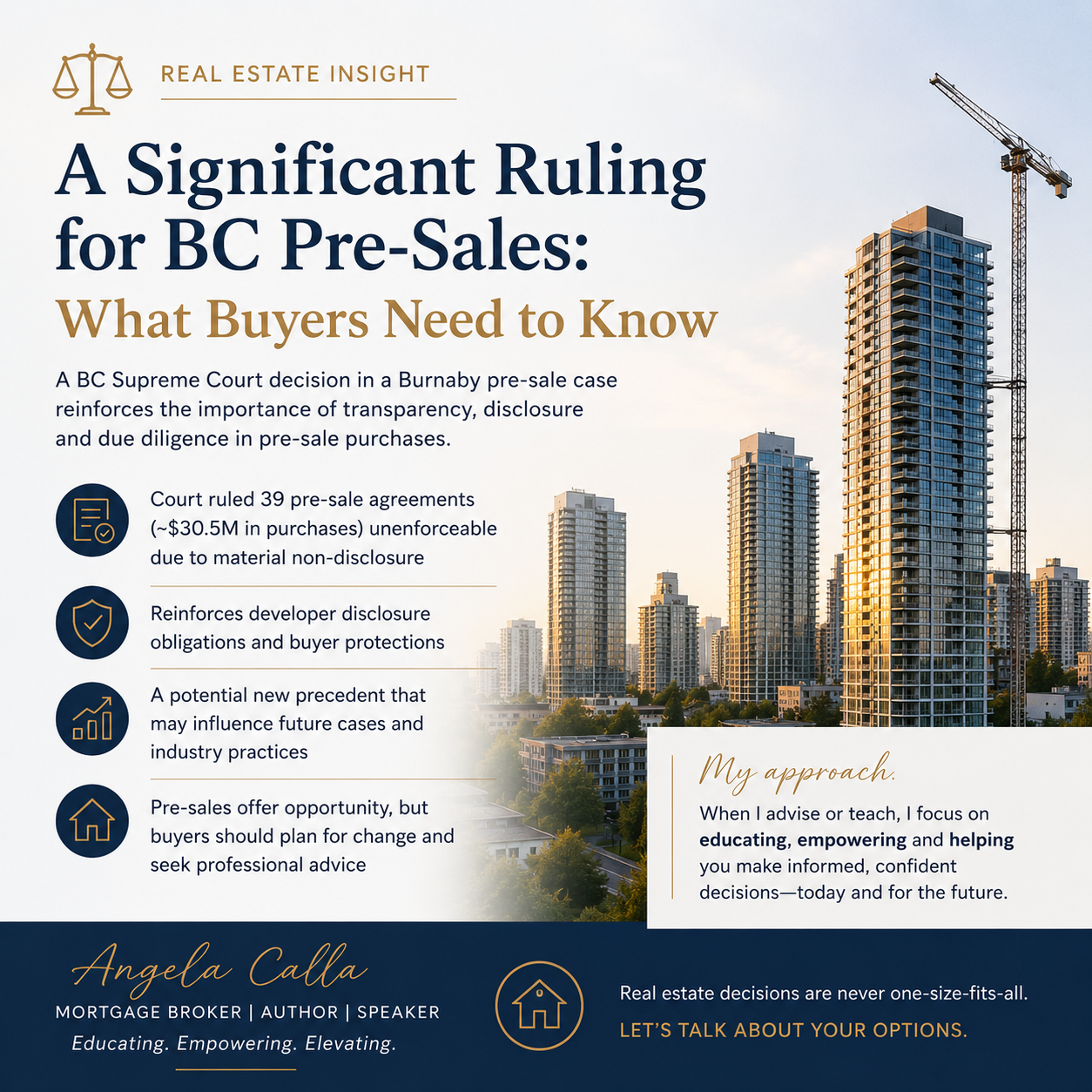
A recent B.C. Supreme Court decision involving the Lumina Eclipse development in Burnaby has created an important conversation about pre-sale real estate — and one that buyers, investors and industry professionals should understand.
The court ruled that 39 pre-sale agreements representing approximately $30.5 million in purchases were unenforceable against the purchasers, after finding the developer failed to properly disclose material developments affecting the project.
It is a significant decision, but also one that deserves a balanced perspective.
What happened?
The purchasers entered into their agreements between 2021 and 2023 — a very different real estate and interest-rate environment.
As the project progressed, the developer experienced significant financial and construction challenges. The project’s new-home warranty insurance was suspended in October 2024, its municipal building permit was paused the following month and construction stopped.
The developer ultimately entered creditor protection.
The court found that material project developments had not been properly disclosed to the affected purchasers as required under B.C.’s Real Estate Development Marketing Act (REDMA).
Importantly, the judge determined that the agreements were unenforceable against these purchasers — not that the agreements were simply cancelled or voided.
Another major question remains outstanding: approximately $3.6 million in deposits were paid by the affected purchasers, and their ultimate recovery is still to be determined.
Why this decision matters
When I am consulting with a borrower or teaching real estate professionals through the Real Estate Board, one of the principles I continually come back to is that there are rarely absolute “good” or “bad” real estate decisions.
There are opportunities, risks and circumstances that need to be understood together.
Pre-sales are a perfect example.
They can provide an opportunity to secure a property well before completion, give purchasers additional time to save and plan, provide access to new construction and potentially allow a buyer to benefit from appreciation before taking possession.
But the time between signing and completion can also introduce meaningful risk.
Property values can change.
Interest rates and lending guidelines can change.
A purchaser’s income or financial circumstances can change.
Construction timelines can change.
And, as this case demonstrates, the circumstances surrounding the development itself can change.
The mortgage side is equally important
One misconception I frequently see is the assumption that because someone can afford or qualify for a pre-sale when they sign the contract, their financing at completion is effectively taken care of.
It isn’t necessarily.
A pre-sale can complete years later. The purchaser may need to qualify based on the lending environment, income, debts and financial circumstances that exist at that time.
The property’s appraised value at completion can matter as well.
That’s why I believe a good pre-sale conversation should involve more than asking, “Do I think this property will go up in value?”
It should also ask:
What happens if it doesn’t?
What if rates are different?
What if my income changes?
What if completion is delayed?
What if I need additional funds at closing?
And equally important: if everything goes according to plan, does this purchase move me closer to my overall financial goals?
That is the type of analysis that helps turn a real estate purchase into a financial strategy rather than simply a transaction.
Does this ruling change pre-sales?
It certainly reinforces the importance of disclosure.
The court’s decision demonstrates that a purchaser’s contractual obligations exist alongside a developer’s legal obligations to disclose material information.
That is an important consumer protection.
It may also lead buyers, developers, Realtors, lawyers and financing professionals to pay even closer attention to disclosure statements, amendments and material changes during the years between purchase and completion.
But I would be cautious about interpreting one decision as meaning pre-sales have suddenly become either safer or riskier.
The lesson is more fundamental:
Due diligence matters. Transparency matters. And professional advice matters.
My takeaway
I remain balanced on pre-sales because I have seen situations where they can be an excellent part of someone’s real estate and financial plan — and others where the risks simply don’t make sense for that particular purchaser.
The objective isn’t to convince someone to buy or not buy.
Whether I’m working directly with a borrower or educating real estate professionals, my role is to help people understand both sides of the decision, stress-test the possibilities and make an informed choice based on their complete financial picture.
This ruling gives our industry another valuable case study.
Because ultimately, the strongest real estate decisions aren’t the ones based on everything going perfectly.
They’re the ones made with a clear understanding of what happens if it doesn’t.
This commentary is for educational purposes and does not constitute legal advice. Anyone involved in a pre-sale purchase or dispute should obtain independent legal advice.
Source: Business in Vancouver
Read the original BIV coverage
Angela Calla is a mortgage renewal and debt elimination expert with over 20 years of industry experience. She is also a multi-award-winning mortgage professional. Since beginning as a mortgage broker in 2004, Angela has helped thousands of Canadians optimize their mortgage strategies, eliminate debt, and build wealth through real estate.
She is the best-selling author of The Mortgage Code, which equips readers with the tools to make informed financial decisions. Additionally, she is the host of Canada’s longest-running finance radio show on CKNW, where she simplifies mortgage advice and empowers listeners to take control of their financial futures.
Angela has been recognized as Business Leader of the Year (2020) by the Tri-Cities Chamber of Commerce and Entrepreneur of the Year (2019) by the City of Port Coquitlam. She is also a sought-after speaker and educator, delivering accredited training for real estate boards across Greater Vancouver.
Angela is a frequent go-to source for media and publishers across the country. For media interviews, speaking inquiries, or personal mortgage assistance, please contact Angela at hello@countoncalla.ca or at 604-802-3983.
Click here to view the latest news on our blog.
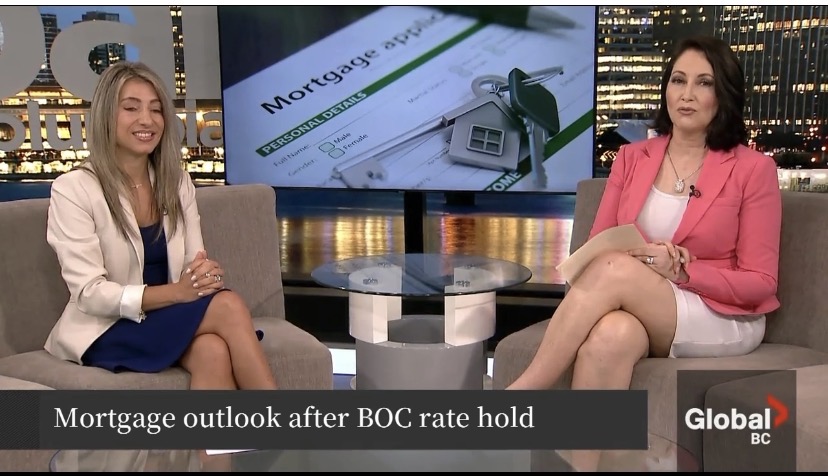
 In this interview: