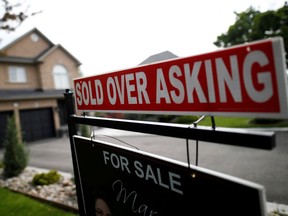
The average mortgage rate will double for those who bought in 2021 on a five-year term, but don’t expect a massive glut of new listings hitting an already depressed market from distressed sellers.
There is plenty of gloom, but will doom soon follow?
The post-COVID sales boom led to 44,000 sales in Greater Vancouver (which includes Metro Vancouver north of the Fraser River and Sea to Sky country) and close to 28,000 in the Fraser Valley (which includes parts of Metro Vancouver such as Surrey that lie south of the Fraser River), as buyers desperate enough to battle through bidding wars and subject-free offers shelled out premium prices for homes, their confidence bolstered by rock-bottom mortgage rates.
Not likely, the experts say.
“Every year, there’s always another prognostication out there from someone who says, ‘This will be the year,’” said Andrew Lis, chief economist and vice-president of analytics for the Vancouver Real Estate Board.
“The fundamentals just don’t really line up with it. When you ask most people who’ve been following the housing market, or who have a lot of knowledge or education … the consensus is that the fundamentals for the economy, for the region, in general, remains strong. Despite slow sales and all this inventory that we have on the market, prices are only down about five per cent.
A bubble burst is not a scenario that anybody should would wish on anyone, he adds.
“If somebody’s hoping for that 50 per cent price decline. It could be the case that, if that comes … you can’t even buy a home because you’ve lost your job.”
What should I know about renewing a mortgage in 2026?
“What people don’t really recognize is that the best rate is rarely the best mortgage because it’s only part of the cost. Penalties, portability, prepayment limits and financing, refinancing, flexibility matter more than a fraction of a per cent.”
If cash flow is an issue, consider consolidating external debt — like credit card balances — into your mortgage or line of credit when refinancing. Slowly paying down a balance at four per cent interest instead of 20 on a credit card is math anyone can understand.
Increasing the length of amortization — how long the mortgage is — will ease the front-end pressure of monthly payments, though you will pay more over the life of mortgage.
The Bank of Canada has indicated it expects to keep its prime rate — which is already 2.25 points off its 2024 high, stable for the foreseeable future.
What should I know about selling a home in 2026?
There were 65,335 listings in Vancouver last year, and 37,963 in the Fraser Valley — both numbers outstripping the marks set during the post-pandemic boom year of 2021. The total number of sales, however, was far below those halcyon years. In the Valley, it was 12,224 sales compared to 27,692 four years ago. In Vancouver, 23,800 compared to 43,999.
“Transactions are happening,” said Lis. “Where they seem to be happening is where buyers and sellers are aligned”.
But getting buyers off the sidelines in force will still be a challenge.
Will the real estate bubble finally burst in 2026?
Jacobsen noted it’s not the first slowdown the region has experienced, just the most recent.
Fraser Valley (including Surrey)
2021
• 27,692 sales
• 35,629 new listings
• Detached home: $1.5 million
• Townhome: $765,800
• Condo: $549,200
2025
• 12,224 sales
• 37,963 new listings
• Detached home: $1,388,400
• Townhouse: $781,300
• Condo: $491,600
Vancouver
2021
• Detached home: $1,910,200
• Townhouse: $1,004,900
• Condo: $761,800
2025
• 23,800 sales
• 65,335 listings
• Detached home: $1,879,800
• Townhouse: $1,056,600
• Condo: $710,000
Full article HERE
Angela Calla is a mortgage renewal and debt elimination expert with over 20 years of industry experience. She is also a multi-award-winning mortgage professional. Since beginning as a mortgage broker in 2004, Angela has helped thousands of Canadians optimize their mortgage strategies, eliminate debt, and build wealth through real estate.
She is the best-selling author of The Mortgage Code, which equips readers with the tools to make informed financial decisions. Additionally, she is the host of Canada’s longest-running finance radio show on CKNW, where she simplifies mortgage advice and empowers listeners to take control of their financial futures.
Angela has been recognized as Business Leader of the Year (2020) by the Tri-Cities Chamber of Commerce and Entrepreneur of the Year (2019) by the City of Port Coquitlam. She is also a sought-after speaker and educator, delivering accredited training for real estate boards across Greater Vancouver.
Angela is a frequent go-to source for media and publishers across the country. For media interviews, speaking inquiries, or personal mortgage assistance, please contact Angela at hello@countoncalla.ca or at 604-802-3983.
Click here to view the latest news on our blog.