2026 Canadian Choice Award

General Angela Calla 20 Jan

CONGRATULATIONS,

Angela Calla Mortgage Team!

We’re excited to officially share that Angela Calla Mortgage Team has been selected as a Winner of the 2026 Canadian Choice Award in the Mortgage Brokers category for Port Coquitlam.

This distinction recognizes businesses that demonstrate excellence, professionalism, and meaningful community impact. Your win reflects the trust you’ve earned and the quality you deliver every day.


Angela Calla is a mortgage renewal and debt elimination expert with over 20 years of industry experience. She is also a multi-award-winning mortgage professional. Since beginning as a mortgage broker in 2004, Angela has helped thousands of Canadians optimize their mortgage strategies, eliminate debt, and build wealth through real estate.

She is the best-selling author of The Mortgage Code, which equips readers with the tools to make informed financial decisions. Additionally, she is the host of Canada’s longest-running finance radio show on CKNW, where she simplifies mortgage advice and empowers listeners to take control of their financial futures.

Angela has been recognized as Business Leader of the Year (2020) by the Tri-Cities Chamber of Commerce and Entrepreneur of the Year (2019) by the City of Port Coquitlam. She is also a sought-after speaker and educator, delivering accredited training for real estate boards across Greater Vancouver.

Angela is a frequent go-to source for media and publishers across the country. For media interviews, speaking inquiries, or personal mortgage assistance, please contact Angela at hello@countoncalla.ca or at 604-802-3983.

Click here to view the latest news on our blog. 

Renewing a mortgage in 2026? Prepare for sticker shock, but no bubble

General Angela Calla 14 Jan

The average mortgage rate will double for those who bought in 2021 on a five-year term, but don’t expect a massive glut of new listings hitting an already depressed market from distressed sellers.

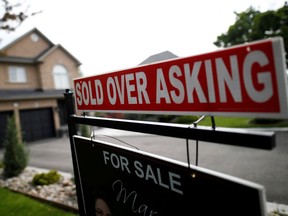
A for sale sign

There is plenty of gloom, but will doom soon follow?

The Lower Mainland real estate market is coming off a year with the lowest sales in more than two decades. The runaway train of prices and sales in a record 2021 is now a nostalgic past.

The post-COVID sales boom led to 44,000 sales in Greater Vancouver (which includes Metro Vancouver north of the Fraser River and Sea to Sky country) and close to 28,000 in the Fraser Valley (which includes parts of Metro Vancouver such as Surrey that lie south of the Fraser River), as buyers desperate enough to battle through bidding wars and subject-free offers shelled out premium prices for homes, their confidence bolstered by rock-bottom mortgage rates.

But 2026 looms large with a rising tide of mortgage renewals. The Canada Mortgage and Housing Corporation expects around 1.15 million of them across Canada.
With rates that had been below two per cent that are now closer to four per cent, those who were on fixed-rate mortgages can expect monthly payments to jump by around 26 per cent, according to ratehub.ca.
While inflation rates of 2023-24 have slowed, the financial pressure on Canadian families is still oppressive. If your mortgage spikes by $1,000 a month, making it untenable for your household, and selling in a weak market isn’t a realistic option, then the question becomes: Is this when the bubble — finally — bursts?

Not likely, the experts say.

“Every year, there’s always another prognostication out there from someone who says, ‘This will be the year,’” said Andrew Lis, chief economist and vice-president of analytics for the Vancouver Real Estate Board.

“The fundamentals just don’t really line up with it. When you ask most people who’ve been following the housing market, or who have a lot of knowledge or education … the consensus is that the fundamentals for the economy, for the region, in general, remains strong. Despite slow sales and all this inventory that we have on the market, prices are only down about five per cent.

A bubble burst is not a scenario that anybody should would wish on anyone, he adds.

“If somebody’s hoping for that 50 per cent price decline. It could be the case that, if that comes … you can’t even buy a home because you’ve lost your job.”

What should I know about renewing a mortgage in 2026?

You should plan to start early, shop around and consider using a mortgage broker.
“Canadians are going to be faced with payment shock. A lot of clients are renewing a 1.6 or 1.9 per cent mortgage anywhere from 3.9 to 4.24 right now,” said Port Coquitlam broker Angela Calla, author of The Mortgage Code and radio host of The Mortgage Show on CKNW.

“What people don’t really recognize is that the best rate is rarely the best mortgage because it’s only part of the cost. Penalties, portability, prepayment limits and financing, refinancing, flexibility matter more than a fraction of a per cent.”

If cash flow is an issue, consider consolidating external debt — like credit card balances — into your mortgage or line of credit when refinancing. Slowly paying down a balance at four per cent interest instead of 20 on a credit card is math anyone can understand.

Increasing the length of amortization — how long the mortgage is — will ease the front-end pressure of monthly payments, though you will pay more over the life of mortgage.

The Bank of Canada has indicated it expects to keep its prime rate — which is already 2.25 points off its 2024 high, stable for the foreseeable future.

What should I know about selling a home in 2026?

It was a brutal 2025 for sellers.
Industry experts have pinned the blame on post-COVID contraction, as workers forced to return to the office grew tired of hours-long commutes, the foreign buyers’ ban and tax, the lingering effects of crippling inflation spikes, and the economic and psychological effects of the trade war with the U.S.
“The demand for real estate is there for buyers and sellers. It’s just getting people off the sidelines,” said Tore Jacobsen, managing broker at Macdonald Realty, and chair of the Fraser Valley Real Estate Board.
Many sellers are buyers themselves, but they need to sell in order to buy, he said.
“What we’re seeing is a need for folks to sell and move, but also just recognizing, ‘I paid X amount of dollars in 2021 for this home, and in 2024, I’m getting Y.’ That math just doesn’t work.”

There were 65,335 listings in Vancouver last year, and 37,963 in the Fraser Valley — both numbers outstripping the marks set during the post-pandemic boom year of 2021. The total number of sales, however, was far below those halcyon years. In the Valley, it was 12,224 sales compared to 27,692 four years ago. In Vancouver, 23,800 compared to 43,999.

“Transactions are happening,” said Lis. “Where they seem to be happening is where buyers and sellers are aligned”.

“The reality is that sellers, who are motivated and are pricing properties correctly for the market environment that we’re in, they’re seeing transactions. The properties we’re seeing that are standing on the market are ones that are anchoring prices to years past.”
Lis expects the market to pick up again in the latter part of 2026, with the spring being the bellwether of its overall strength. He said the B.C. economy is still relatively unaffected by U.S. tariffs, and his projections are for about 27,000 sales in Vancouver.

But getting buyers off the sidelines in force will still be a challenge.

“My instinct for 2026 is that … everybody’s going to remain very cautious,” said Aled ab Iorwerth, the CMHC’s deputy chief economist. “It’s sort of a standard economic approach that when you see a lot of uncertainty, your first best option is to do nothing, and try and see how the uncertainty will resolve itself. And I think that’s what’s really happening.”

Will the real estate bubble finally burst in 2026?

In 2009, the subprime mortgage crisis in the U.S. cooled the market in Canada, and especially in Vancouver. But it bounced back within a year, with the record-low sales to start the season being matched by record-highs by December.
Then there was 2012, when sales dropped by 24 per cent in Vancouver as tightening mortgage restrictions and economic uncertainty combined to stagnate the market. But prices and sales boomed again the following year.
“I don’t think this is the bubble,” said Jacobsen of today’s market. “We have seen over the course of 50, 60 years, as long as they’ve been tracking real estate, there is always ups and downs in the market, but the general appreciation has always been in a northward direction.”

Jacobsen noted it’s not the first slowdown the region has experienced, just the most recent.

“This is such an amazing place to live, as far as a country is concerned. And B.C. is an absolute paradise. … There will always be demand for B.C., and I don’t anticipate a bubble popping.
The federal ban on foreign buyers is set to expire in 2027. While there is still the provincial tax of 20 per cent for foreign buyers, there will be a lot of attention of Vancouver from the FIFA World Cup this year.
“I expect very much that FIFA will do the same” as Expo and the Olympics, said Jacobsen. “I think people will realize — whether we see it or not, because we are here every day, and take it for granted — that this is one of those paradise-on-Earth type of places. It’s hard to beat mountains and ocean all in the same photograph.”
How does 2021 compare to 2025 for sales, listings and average price?

Fraser Valley (including Surrey)

2021

• 27,692 sales
• 35,629 new listings
• Detached home: $1.5 million
• Townhome: $765,800
• Condo: $549,200

2025

• 12,224 sales
• 37,963 new listings
• Detached home: $1,388,400
• Townhouse: $781,300
• Condo: $491,600

Vancouver

2021

• 43,999 sales• 62,265 listings
• Detached home: $1,910,200
• Townhouse: $1,004,900
• Condo: $761,800

Article content

2025

• 23,800 sales
• 65,335 listings
• Detached home: $1,879,800
• Townhouse: $1,056,600
• Condo: $710,000

Full article HERE


Angela Calla is a mortgage renewal and debt elimination expert with over 20 years of industry experience. She is also a multi-award-winning mortgage professional. Since beginning as a mortgage broker in 2004, Angela has helped thousands of Canadians optimize their mortgage strategies, eliminate debt, and build wealth through real estate.

She is the best-selling author of The Mortgage Code, which equips readers with the tools to make informed financial decisions. Additionally, she is the host of Canada’s longest-running finance radio show on CKNW, where she simplifies mortgage advice and empowers listeners to take control of their financial futures.

Angela has been recognized as Business Leader of the Year (2020) by the Tri-Cities Chamber of Commerce and Entrepreneur of the Year (2019) by the City of Port Coquitlam. She is also a sought-after speaker and educator, delivering accredited training for real estate boards across Greater Vancouver.

Angela is a frequent go-to source for media and publishers across the country. For media interviews, speaking inquiries, or personal mortgage assistance, please contact Angela at hello@countoncalla.ca or at 604-802-3983.

Click here to view the latest news on our blog. 
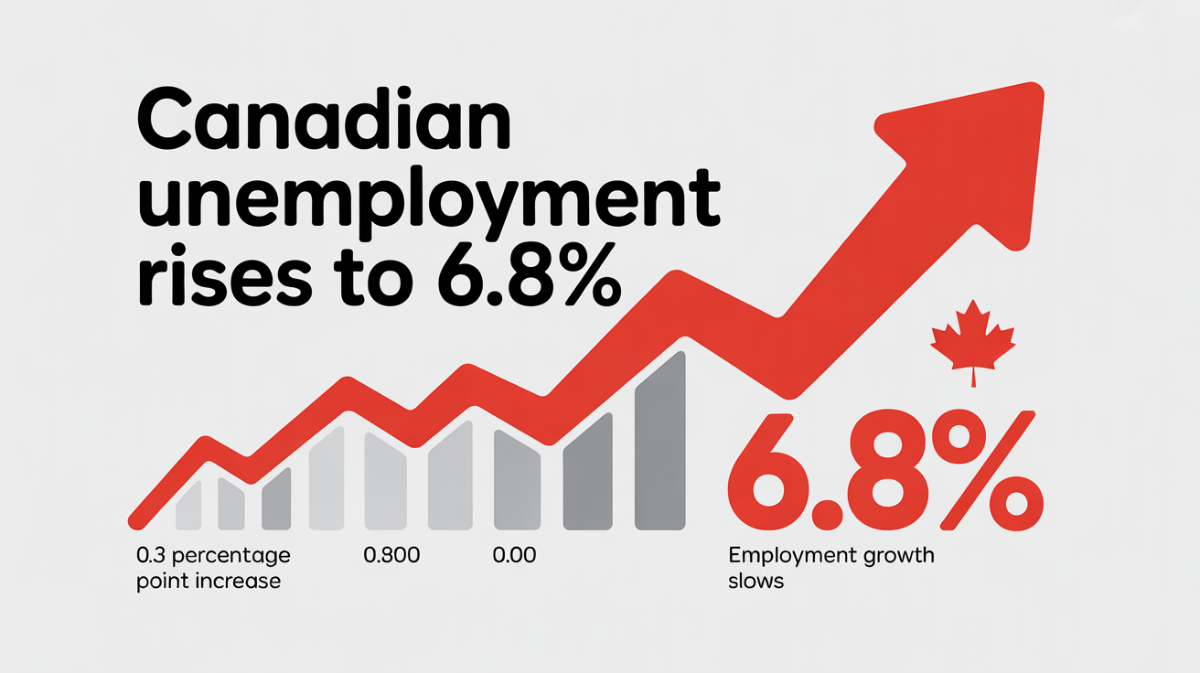
Canadian Employment Rises 8,200 as the Jobless Rate Rises to 6.8%.

General Angela Calla 9 Jan


Canadian Job Growth Slows Markedly in December as the Unemployment Rate Rises to 6.8%
Today’s Canadian Labour Force Survey for December was weaker than expected. Employment was little changed (+8200; 0.0%), and the employment rate held steady at 60.9%. This followed three consecutive monthly increases.

The jobless rate rose 0.3 percentage points to 6.8%, as more people searched for work. The increase in the unemployment rate in December partially offsets a cumulative decline of 0.6 percentage points in the previous two months. Employment rose among people aged 55 and older, while it fell among youth aged 15 to 24.

Full-time employment rose by 50,000 (+0.3%) in December, while part-time employment fell by 42,000 (-1.1%). The decline in part-time work in the month partially offsets a cumulative gain of 148,000 (+3.9%) in October and November. Over the 12 months to December 2025, part-time employment rose at a faster pace (+2.6%; +99,000) than full-time employment (+0.7%; +128,000).

In December, there was little change in the number of private- and public-sector employees, as well as in the number of self-employed workers.

There were 1.6 million people unemployed in December, an increase of 73,000 (+4.9%) from November.

The participation rate—the proportion of the population aged 15 and older who were employed or looking for work—rose by 0.3 percentage points to 65.4%. On a year-over-year basis, the labour force participation rate was unchanged in December. The unemployment rate for youth aged 15 to 24 rose 0.5 percentage points to 13.3% in December, as fewer youth were employed (-27,000; -1.0%). Labour market conditions had previously improved for youth in October and November, with employment rising by 70,000 (2.6%) and the youth unemployment rate falling by 1.9 percentage points over this period.

In 2025, Trump’s tariff policy and negative attitude towards Canada have caused considerable uncertainty, having a marked deleterious effect on the Canadian economic outlook, particularly in sectors dependent on US demand. Job vacancies also fell during 2025.

Bottom Line

The Bank of Canada has reiterated that its primary mandate is price stability, effectively leaving the task of closing the output gap to fiscal authorities. By early next year, it will likely become evident that fiscal support delivered through large capital projects is rolling out too slowly to offset near-term weakness in activity materially. If layoffs persist at their recent pace and the United States were to withdraw from the Canada‑US‑Mexico Agreement, the case for an additional round of monetary easing would strengthen.

Absent that downside scenario, the more plausible path is a slow and limited normalization of policy. Market pricing currently anticipates that the next move by the Bank of Canada will be to raise the overnight policy rate, but that is not likely until at least late this year.

Dr. Sherry Cooper
Chief Economist, Dominion Lending Centres
drsherrycooper@dominionlending.ca


Angela Calla is a mortgage renewal and debt elimination expert with over 20 years of industry experience. She is also a multi-award-winning mortgage professional. Since beginning as a mortgage broker in 2004, Angela has helped thousands of Canadians optimize their mortgage strategies, eliminate debt, and build wealth through real estate.

She is the best-selling author of The Mortgage Code, which equips readers with the tools to make informed financial decisions. Additionally, she is the host of Canada’s longest-running finance radio show on CKNW, where she simplifies mortgage advice and empowers listeners to take control of their financial futures.

Angela has been recognized as Business Leader of the Year (2020) by the Tri-Cities Chamber of Commerce and Entrepreneur of the Year (2019) by the City of Port Coquitlam. She is also a sought-after speaker and educator, delivering accredited training for real estate boards across Greater Vancouver.

Angela is a frequent go-to source for media and publishers across the country. For media interviews, speaking inquiries, or personal mortgage assistance, please contact Angela at hello@countoncalla.ca or at 604-802-3983.

Click here to view the latest news on our blog.